Home Page About Us | Catalog Request | Order Status
Customer Service | Contact Us
Tall Ships Yachts Cruise Ships Speed Boats Civil War Ships Nautical Decor
SALE    BEST SELLERS    GIFT IDEAS    BUYERS GUIDE    (800) 313-9128

   SHOP BY PRICE
Spacer
Spacer
Spacer
Spacer
Spacer

   SHOP BY MODEL
Spacer
Spacer
Spacer
Spacer
Spacer
Spacer
Spacer
Spacer
Spacer
Spacer

   TALL SHIPS
Pirate Ship Pirate Ships
Pirate Ship Model Ships
 > Caribbean Pirate
USS Constitution Model Ships
U.S. Tall Ships Model Ships U.S. Tall Ships
US Boat Models
 > USS Constitution
USS Constitution Model Ships
 > Charles Morgan
Charles Morgan Model Ships
 > Baltimore Clipper...
Baltimore Clipper... Model Ships
 > USS Constellation
USS Constellation Model Ships
 > USS Essex
USS Essex Model Ships
 > Brig Niagara
Brig Niagara Model Ships
 > USCG Eagle
USCG Eagle Model Ships
 > Rattlesnake
Rattlesnake Model Ships
 > More Tall Ships
USS Essex Model Ships
British Tall Ships Model Ships British Tall Ships
British Model Boats
 > HMS Victory
HMS Victory Model Ships
 > HMS Surprise -
    Master & Commander
HMS Surprise Model Ships
 > Sovereign of the ...
Sovereign of the seas Model Ships
 > Cutty Sark
Cutty Sark Model Ships
 > HMS Beagle
HMS Beagle Model Ships
 > HMS Bounty
HMS Bounty Model Ships
 > HMS Leopard
HMS Leopard Model Ships
 > HMS Endeavour
HMS Endeavour Model Ships
 > Mayflower
Mayflower Model Ships
 > More Tall Ships
Prince Royal Model Ships
Other Tall Ships Other Tall Ships
Other Tall Boats
San Felipe San Felipe
San Felipe Model Ships
Soleil Royal Soleil Royal
Soleil Royal Model Ships
Batavia Wasa
Wasa Model Ships
Spanish Galleon Spanish Galleon
Spanish Galleon Model Ships
Santa Maria Santa Maria
Santa Maria Model Ships
 > More Tall Ships
More Tall Ships

   YACHTS
Atlantic Model Ships Atlantic
Atlantic Ship Models
America's Cup Model Ships America's Cup
America's Cup Model Boats
Columbia Model Ships Columbia
Columbia Ship Models
Defender Model Ships Defender
Defender Ship Models
Endeavour Model Ships Endeavour
Endeavour Ship Models
Enterprise Model Ships Enterprise
Enterprise Ship Models
Ranger Model Ships Ranger
Ranger Ship Models
Shamrock Model Ships Shamrock
Shamrock Ship Models
 > More America's Cup
More America's Cup Model Ships
Schooners Model Ships Schooners
Schooners Model Boats
America Model Ships America
America Ship Models
Bluenose Model Ships Bluenose
Bluenose Ship Models
Bluenose Model Ships Bluenose 2
Bluenose 2 Ship Models
 More Yachts
More Yachts Model Ships

   CRUISE SHIPS
Titanic Model Ships Titanic
Titanic Ship Models
Titanic Model Ships Carnival
Titanic Ship Models
 > Liberty
Liberty Ship Models
 > Paradise
Paradise Ship Models
 > Fantasy
Fantasy Ship Models
 >  More Carnival Ships
More Carnival Boats
Titanic Model Ships Cunard
Cunard Ship Models
 > Queen Mary
Cunard Queen Mary 2 Ship Models
 > Queen Mary 2
Cunard Queen Mary 2 Ship Models
 > QueenElizabeth 2
Cunard QueenElizabeth 2 Ship Models
 Titanic Model Ships Royal Caribbean
Royal Caribbean Ship Models
 > Majesty of the Seas
Majesty of the Se... Ship Models
 > Vision of the Seas
Vision of the Se... Ship Models
 > Legend of the Seas
Legend of the Se... Ship Models
 > Jewel of the Seas
Jewel of the Se... Ship Models
 More Cruise Ships
More Cruise Boats

   SPEED BOATS
Ferrari Hydroplan... Model Ships Ferrari Hydroplan...
Spacer
Typhoon Model Ships Typhoon
Spacer
Chris Craft Triple Model Ships Chris Craft
Chris Craft Ship Models
 > Triple Cockpit
Chris Craft Triple Ship Models
 > Dual Cockpit
Chris Craft Dual Ship Models
 > Runabout
Chris Craft Runabout Ship Models
 > Cobra
Chris Craft Cobra Ship Models
 Riva Model Ships Riva
Spacer
 > Aquarama
Spacer
 > Rivarama
Spacer
 > Aquariva
Spacer
 > Ariston
Spacer
 More Speed Boats
More Model Speed boats Boats

   CIVIL WAR SHIPS
 U.S. Tall Ships Model Ships CSS Virginia
CSS Virginia Model Ships
 U.S. Tall Ships Model Ships CSS Alabama
CSS Alabama Model Ships
 U.S. Tall Ships Model Ships Monitor
Monitor Model Ships
 U.S. Tall Ships Model Ships USS Kearsarge
USS Kearsarge Model Ships
 > More Ships
More Civil Model Ships

   MODERN WARSHIPS
USS Enterprise Model Ships USS Enterprise
USS Enterprise Boat Models
USS Ronald Reag... Model Ships USS Ronald Reag...
USS Ronald Reag... Boat Models
USS Hornet Model Ships USS Hornet
USS Hornet Boat Models
USS Missouri Model Ships USS Missouri
USS Missouri Boat Models
 > More Warships
More Warship Model Ships

   NAUTICAL DECOR

   DISPLAY ITEMS
Spacer

   CUSTOM ORDERS
Spacer

Value priced authentic model ships and model boats. These quality tall ships are ideal as nautical gifts, collectors items, office or home decor. Hand Crafted Model Ships is your source for value and quality in these timeless creations of art.


Spacer

All models fully assembled and ready to display.

  HMS Victory Limited 30"  Item: A0104-C   

HMS Victory Limited 30"

Overall Dimensions: 30" L x 9" W x 23" H
Pictures | Description | History | Buyers Guide

Price: $699.99 $399.99
with FREE shipping in USA* and Canada
Add Marble Base $29.99 (save $40.00)
Add Wall Mounted Display Shelf $49.99
Add The Nelson Encyclopedia FREE
Add Display Case (DC04) $99.99 (save $150.00)
Add Display Table $249.99 (save $100.00)
Special: Add Table & Case $349.99 (save another $50.00)

In Stock: Usually ships out next business day with tracking number

Sold Fully Assembled (we do not sell kits)

Qty:
or Call (800) 313-9128

Museum Quality - 100% Money Back Guarantee!
*Insurance included - Express shipping available.
AK, HI, international Contact us for quote.


 Pictures

Back to the top of this page  

 Model Description

Read our model ship buyers guide
See how we make our models

  • 30" long x 9 " Wide x 23" High (1:135 scale)
  • Compared to our HMS Victory 30" regular", this model has the copper plated hull.
  • Real authentically aged copper plated hull, like the actual HMS Victory (done to prevent the toredo worm from destroying the hull)
  • Amazing details (cannonball racks between the cannons, planked deck where you can see the nail holes, oars in the lifeboats, lantern of the main mast)
  • Meticulously painted to the actual HMS Victory as she was at the Battle of Trafalgar
  • 18 masterfully stitched, thick canvass sails that hold their shape and do not wrinkle
  • Turned brass cannons
  • Advanced rigging techniques over 100 blocks/deadeyes
  • Perfectly taught rigging of various colors and thickness to increase authenticity
  • Authentic lifeboats - not flat bottomed
  • Visible lower deck below the life boats where you can see the full cannons and cannonballs lined up!
  • Requires hundreds of hours to build from scratch (not from a model kit) by our master artisans.
  • Built with rare, high quality woods such as oak, maple, cherry and white pine.
  • The model rests perfectly on a large, wood base between four arched metal dolphins.
  • To build this ship, extensive research was done using various sources such as museums, drawings, copies of original plans and photos of the actual ship.
  • Visit our Frequently Asked Questions or call with questions.

    Offering three other HMS Victory models
    (HMS Victory 30", HMS Victory 38" and
    HMS Victory Limited Package

    Which HMS Victory model is right for me?
    Read our
    "HMS Victory Buyers Guide"

  • Back to the top of this page  

 Professional Packaging
Click this picture to enlarge itClick this picture to enlarge itClick this picture to enlarge it
Packging Information
Back to the top of this page  

 Historical Significance
 

HMS Victory is a 104-gun ship of the line of the Royal Navy, built between 1759 and 1765. She is the oldest naval ship still in commission. She sits in dry dock in Portsmouth as a museum ship.

Construction

In December 1758, the commissioner of Chatham Dockyard was instructed to prepare a dry dock for the construction of a new 106-gun first-rate ship. This was an unusual occurrence at the time; during the whole of the 18th century only ten were constructed—the Royal Navy preferred smaller and more manoeuvrable ships and it was unusual for more than two to be in commission simultaneously.

The outline plans arrived in June 1759 and were based on HMS Royal George which had been launched at Woolwich Dockyard in 1756. The Naval Architect to design the ship was Sir Thomas Slade who, at the time, was the appointed Surveyor of the Navy.

The keel was laid on July 23, 1759 in the Old Single Dock (since renamed No. 2 Dock and now Victory Dock), and the name was finally chosen in October 1760. It was to commemorate the Annus Mirabilis or Year of Victories, of 1759. In that year of the Seven Years' War, land victories had been won at Quebec, Minden and naval battles had been won at Lagos and Quiberon Bay. There were some doubts whether this was a suitable name since the previous first-rate Victory had been lost with all on board in 1744.

Once the frame had been constructed it was normal to cover the ship up and leave it for several months to season. However, the end of the Seven Years' War meant that she remained in this condition for nearly three years, which helped her subsequent longevity. Work restarted in autumn 1763 and she was finally launched on May 7, 1765 having cost £63,176 and 3 shillings (present day £50 million) and used around 6000 trees, 90% of which were oak and the remainder elm, pine and fir.

Because there was no immediate use for her she was placed in ordinary—in reserve having been roofed over, demasted and placed under general maintenance—moored in the River Medway for 13 years until France joined the American War of Independence.

In March 1778 John Lindsay was appointed her very first captain, but he was transferred to captain HMS Prince George in May 1778 when Admiral the Honorable Augustus Keppel decided to raise his flag in Victory. She was commissioned in May 1778 under the command of Rear Admiral John Campbell (1st Captain) and Captain Jonathan Faulknor (2nd Captain), with the flag of Admiral Keppel. She was armed with smooth bore, cast iron cannon 30 × 32 and 42 pounders (15 and 19 kg), 30 × 24 pounders (11 kg), and 40 × 12 pounders (5 kg). Later she also carried two carronade guns, firing 68 lb (31 kg) round shot.

In service

First Battle of Ushant

Keppel put to sea from Spithead on July 9, 1778, with a force of thirty ships of the line and, on July 23, sighted a French fleet of twenty-nine ships 100 miles (160 km) west of Ushant. The French Admiral, Louis Guillouet, comte d'Orvilliers, who had orders to avoid battle, was cut off from Brest but retained the weather gage. Two of his ships escaped into port leaving him with twenty-seven. The two fleets manoeuvred during shifting winds and a heavy rain squall until a battle became inevitable with the British more or less in column and the French in some confusion. However, the French managed to pass along the British line with their most advanced ships. At about a quarter to twelve Victory opened fire on the Bretagne of 110 guns, which was being followed by the Ville de Paris of 90 guns. The British van escaped with little loss but Sir Hugh Palliser's rear division suffered considerably. Keppel made the signal to follow the French but Palliser did not conform and the action was not resumed. Keppel was court martialled and cleared and Palliser criticised by an inquiry before the affair turned into a party political squabble.

In March 1780 the hull below the waterline was sheathed with 3,923 sheets of copper to protect it against shipworm.

Second Battle of Ushant

On December 2, 1781, Victory, now commanded by Captain Henry Cromwell and bearing the flag of Rear Admiral Richard Kempenfelt, sailed with eleven other ships of the line, a 50-gun fourth-rate, and five frigates, to intercept a French convoy that sailed from Brest on December 10. Ignorant of the fact that the convoy was protected by twenty-one ships of the line under the command of Luc Urbain de Bouexic, comte de Guichen, Kempenfelt ordered a chase when they were sighted on December 12 and began the Second Battle of Ushant. When he noted the French superiority he contented himself with capturing fifteen sail of the convoy. The French were dispersed in a gale and forced to return home.

Battle of Cape St. Vincent

In 1796 Captain Robert Calder (First Captain) and Captain George Grey (Second Captain) commanded Victory under Admiral Sir John Jervis's flag. Sir John Jervis sailed from the Tagus on January 18, 1797, and after being reinforced on February 6 by five ships from England, his fleet consisted of fifteen sail of the line and six frigates. On February 14, the Portuguese frigate Carlotta, commanded by a Scotsman named Campbell with a Portuguese commission, brought news that a Spanish fleet was close. Jervis manoeuvred to intercept, and the Battle of Cape St Vincent was joined. Principe de Asturias, leading the Spanish leeward division, tried to break through the British line ahead or astern of Victory but that ship poured such a tremendous fire into her, followed by several raking broadsides, that the whole Spanish division wore round and bore up. Horatio Nelson, in HMS Captain (primarily), also played a decisive role in this action.

Reconstruction

In February 1798, Victory was stationed at Chatham under the command of Lieutenant J. Rickman. On December 8, unfit for service as a warship, she was ordered to be converted to a hospital ship to hold wounded French and Spanish prisoners of war. In 1799, Rickman was relieved by Lieutenant J. Busbridge.

However on October 8, 1799 HMS Impregnable was lost off Chichester, having run aground on her way back to Portsmouth after escorting a convoy to Lisbon. She could not be refloated and so was stripped and dismantled. Consequently, now short of a first rate, the Admiralty decided to recondition Victory. Work started in 1800 but as it proceeded an increasing number of defects were found and the repairs developed into a very extensive reconstruction. The original estimate was £23,500 but the final cost was £70,933.

Extra gun ports were added, taking her from 100 guns to 104, and her magazine lined with copper. Her figurehead was replaced along with her masts and the paint scheme changed from red to the black and yellow seen today. Her gun ports were originally yellow to match the hull but later repainted black, giving a pattern later called the "Nelson chequer" and which was subsequently adopted by all Royal Navy ships after the Battle of Trafalgar. The work was completed on April 11, 1803 and the ship left for Portsmouth on May 14 under her new captain, Samuel Sutton.

Nelson

Lord Nelson hoisted his flag in Victory on May 16, 1803 with Samuel Sutton as his flag captain and sailed to assume command in the Mediterranean on May 20. Nelson transferred to the faster frigate Amphion on May 23.

On May 28 Captain Sutton captured the French Embuscade of 32 guns, bound for Rochefort from San Domingo. Victory rejoined Lord Nelson off Toulon on July 30 when Captain Sutton exchanged commands with the captain of the Amphion, Thomas Masterman Hardy.

Victory was passing the island of Toro on April 4, 1805, when HMS Phoebe brought the news that the French fleet under Pierre-Charles Villeneuve had escaped from Toulon. While Nelson made for Sicily to see if the French were heading for Egypt, Villeneuve was entering Cádiz to link up with the Spanish fleet. On May 7, Nelson reached Gibraltar and received his first definite news. The British fleet completed their stores in Lagos Bay, Portugal, on May 10 and two days later sailed westward with ten ships and three frigates in pursuit of the combined Franco-Spanish fleet of 17 ships. They arrived in the West Indies to find that the enemy was sailing back to Europe where Napoleon Bonaparte was waiting for them with his invasion forces at Boulogne.

The Franco-Spanish fleet was involved in the indecisive Battle of Cape Finisterre in fog off Ferrol with Admiral Sir Robert Calder's squadron on July 22 before taking refuge in Vigo and Ferrol to land wounded and abandon three damaged ships. Calder on August 14 and Nelson on August 15 joined Admiral Cornwallis's Channel Fleet off Ushant. Nelson continued to England in Victory leaving his Mediterranean fleet with Cornwallis who detached twenty of his thirty-three ships of the line and sent them under Calder to find the combined fleet at Ferrol. On August 19 came the worrying news that the enemy had sailed from there, followed by relief when they arrived in Cádiz two days later. On the evening of Saturday, September 28, Lord Nelson joined Lord Collingwood's fleet off Cádiz, quietly, so that his presence would not be known.

When Admiral Villeneuve learned that he was to be removed from command he took his ships to sea on the morning of October 19, first sailing south towards the Mediterranean but then turning north towards the British fleet, beginning the Battle of Trafalgar. Nelson had already made his plans: to break the enemy line some two or three ships ahead of their Commander in Chief in the centre and achieve victory before the van could come to their aid. In the event fitful winds made it a slow business. For five hours after Nelson's last manoeuvring signal the two columns of British ships slowly approached the French line before Royal Sovereign, leading the lee column, was able to open fire on Fougueux. Twenty five minutes later Victory broke the line between Bucentaure and Redoutable firing a double shotted broadside into the stern of the former from a range of a few yards. At 25 minutes past one Nelson was shot, the fatal ball entering his left shoulder and lodging in his spine. He died at half past four. Such killing had taken place on Victory's quarter deck that Redoutable attempted to board her, but the marines and small arms men repelled them. Nelson's last order was for the fleet to anchor but this was rejected by Vice Admiral Collingwood. Victory lost 57 killed and 102 wounded.

After Trafalgar

Victory took Nelson's body to England where, after lying in state at Greenwich, he was buried in St. Paul's Cathedral on January 6, 1806.

Victory bore many Admirals' flags after Trafalgar, and sailed on numerous expeditions, including two Baltic campaigns under Admiral Sir James Saumarez. Her active career ended on November 7, 1812, when she was moored in Portsmouth Harbour off Gosport and used as a depot ship.

It is said that when Thomas Hardy was First Sea Lord, he told his wife on returning home, that he had just signed an order for Victory to be broken up. She burst into tears and sent him straight back to his office to rescind the order. Though this story may be apocryphal, the page of the duty log containing the orders for that day is missing, having been torn out.

In 1889, Victory was fitted up as a Naval School of Telegraphy. It soon became a proper Signal School, and signal ratings from ships paying off were sent to Victory instead of the barracks, for a two-month training course. The School remained on Victory until 1904, when training was transferred temporarily to HMS Hercules, and in 1906 the whole School was moved to a permanent establishment at the Royal Naval Barracks.

As the years passed by, Victory slowly deteriorated at her moorings. A campaign to save her was started in 1921 with the Save the Victory Fund under the aegis of the Society for Nautical Research, by which time she was in very poor condition. The outcome of the campaign was that the British Government agreed to restore and preserve her to commemorate Nelson, the Battle of Trafalgar and the Royal Navy's supremacy during and after the Napoleonic period.

On January 12,1922 she was moved into the oldest drydock in the world: No. 2 dock at Portsmouth for restoration. In 1928 King George V was able to unveil a tablet celebrating the completion of the work, although restoration and maintenance still continued under the supervision of the Society for Nautical Research. 'Victory' was bombed in 1941 by the Luftwaffe causing damage to the hull.

Over the last few years the ship has undergone another very extensive restoration to bring her appearance to as close as possible to that which she had at Trafalgar for the bicentenary of the battle in October 2005.

HMS Victory is still in commission as the flagship of the admiral for the time being acting as Second Sea Lord in his role as Commander in Chief of the Royal Navy's Home Command (CINCNAVHOME). She is the oldest commissioned warship in the world, although the USS Constitution, launched 30 years later, is the oldest commissioned warship still afloat. Victory attracts around 350,000 visitors per year in her role as a museum ship.

The Victory's foretopsail was severely damaged during the battle of Trafalgar, perforated by upwards of 90 cannonballs and other projectiles. It was replaced after the battle but was preserved, and eventually came to be displayed in the Royal Naval Museum. The sail is laid out across a large chamber, illuminated by alternating lowlight projectors.

The name is also used to refer to the westernmost entrance (Victory Gate) to the Royal Navy's facility in Portsmouth, HMS Nelson.

The current commanding officer is Lt. Cdr. John Scivier

The most senior Trafalgar descendant alive and HON Commanding officer is James Hardy.

Back to the top of this page  


Receive a Free Catalog
Search our site using Google


Handcrafted Model Ships, LLC.
(800) 313-9128    (626) 299-7330
1841 West Valley Blvd. Alhambra, CA 91803... Map It
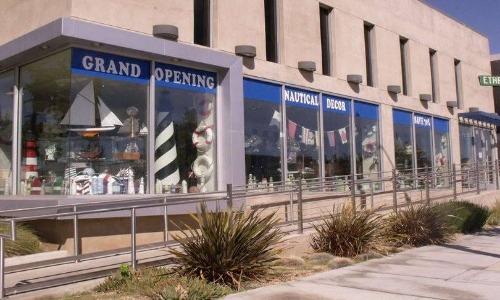
Come visit our showroom - All models on display.

SHOP: U.S. Tall Ships | British Tall Ships | Civil War Ships
Other Tall Ships | Model Cruise Ships | Speed Boats | Other Models
Display Shelf | Display Cases | Display Tables | Custom Orders

Spacer
As seen on The Price is Right
Spacer
Spacer
Click for details
Spacer
Spacer
Spacer


Enter Tracking #:

Spacer
Richard Norris
Founder & Master Builder
Call us now
(800) 313-9128


HMS Victory 30"
Sale Price: $299.99

VisaMastercardAMEX
DiscoverWe Accept Checks tooPayPal too

100% Money Back Guaranteed

Home | About Us | Model Gallery | Buyers Guide | Contact | Help

© 2008 Handcraftedmodelships.com. All Rights Reserved.
Affiliate Program  Links  Satisfaction Guaranteed
Privacy Policy  Terms of Use  Site Map